Strom
Strom - N-Acetyl Cysteine (NAC) - 80 Servings
Strom - N-Acetyl Cysteine (NAC) - 80 Servings
Strom N-Acetyl Cysteine (NAC) is a powdered food supplement providing 1,000mg of N-Acetyl Cysteine per serving.
N-Acetyl Cysteine, commonly abbreviated to NAC, is a modified form of the amino acid L-cysteine. It is widely studied for its involvement in glutathione production, antioxidant defence and several important physiological processes.
Glutathione is a naturally occurring antioxidant found throughout the body. It plays an important role in maintaining cellular redox balance, helping protect cells against oxidative stress and supporting normal cellular function.
NAC acts as a source of cysteine, one of the three amino acids required for glutathione synthesis. By increasing cysteine availability, NAC can support glutathione production under certain physiological conditions.
Beyond its role in glutathione metabolism, clinical research has investigated NAC for its effects on respiratory health, oxidative stress, and several other areas of human health. However, evidence strength varies considerably across applications, and findings from medical settings should not automatically be applied to routine supplementation in healthy individuals.
Each 5g serving of Strom NAC provides 1,000mg of N-Acetyl Cysteine alongside 100mg of trisodium citrate.
Trisodium citrate is a sodium salt of citric acid commonly used in food and supplement formulations. It can help regulate acidity and buffer a powdered drink.
Each 400g container provides approximately 80 servings when following the manufacturer's recommended 5g serving size.
Strom NAC is labelled as suitable for vegetarians and vegans and is manufactured in the United Kingdom.
The Basics
- N-Acetyl Cysteine (NAC) powder
- 1,000mg N-Acetyl Cysteine per serving
- 100mg trisodium citrate per serving
- 5g serving size
- 80 servings per container
- 400g net weight
- Source of cysteine for glutathione synthesis
- Involved in cellular antioxidant processes
- Powdered alternative to NAC capsules
- Suitable for vegetarians
- Suitable for vegans
- Manufactured in the United Kingdom
How & When to Use
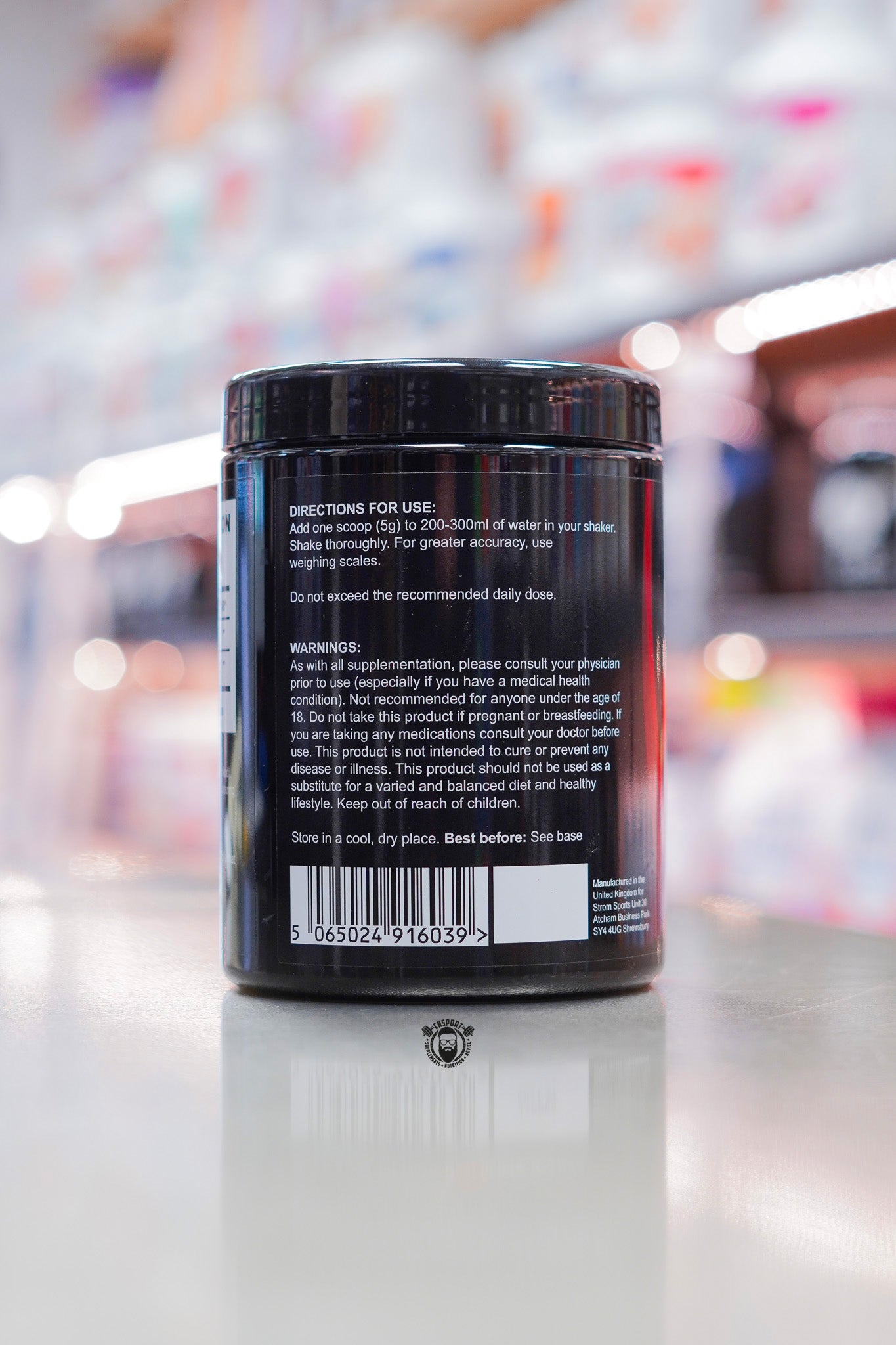
Add 1 scoop (5g) to 200–300ml of water in a shaker.
Shake thoroughly before consuming.
For greater accuracy, the manufacturer recommends using weighing scales rather than relying entirely on the supplied scoop.
The packaging does not specify a particular time of day for consumption.
Do not exceed the recommended daily dose.
Important: Consult a healthcare professional before use, particularly if you have an existing medical condition or take medication. Not recommended for anyone under 18 or during pregnancy or breastfeeding.
Ingredients Panel
Flavour: Lemonade
Serving Size: 1 Scoop (5g)
Servings Per Container: 80
Active Ingredient Information
|
Active Ingredient |
Per 5g Serving |
RI |
|
N-Acetyl Cysteine |
1,000mg |
** |
|
Trisodium Citrate |
100mg |
** |
RI = Reference Intake.
** No Reference Intake established.
The manufacturer does not provide a complete macronutrient or energy declaration on the supplied packaging.
Ingredients List
Maltodextrin, N-Acetyl Cysteine, Acidity Regulator (Citric Acid), Flavouring, Trisodium Citrate, Sweetener (Sucralose), Colouring (Beta Carotene).
Allergen Advice: For allergens, see ingredients in bold. Produced in a facility that handles Milk, Soy, Egg and Gluten.
Dietary Suitability: Suitable for vegetarians and vegans.
FAQ
Frequently Asked Questions
What is N-Acetyl Cysteine (NAC)?
N-Acetyl Cysteine is a modified form of the amino acid L-cysteine.
It is used in both nutritional supplementation and clinical medicine, mainly because it supplies cysteine and influences glutathione metabolism.
NAC has also been studied for its mucolytic properties, meaning its ability to reduce mucus viscosity.
What is the relationship between NAC and glutathione?
Glutathione is a naturally occurring compound made from three amino acids: glutamate, cysteine and glycine.
Cysteine availability can limit glutathione synthesis.
NAC provides a source of cysteine, potentially increasing its availability for glutathione production.
However, supplementing with NAC does not guarantee increased glutathione levels in every individual, particularly when existing glutathione status is adequate.
What is glutathione?
Glutathione is a tripeptide found in cells throughout the human body.
It supports antioxidant defence, cellular redox regulation, and several metabolic processes.
Glutathione helps neutralise certain reactive compounds and participates in systems that protect cells from oxidative damage.
How much NAC does each serving provide?
Each 5g serving of Strom N-Acetyl Cysteine provides 1,000mg of NAC.
The container provides approximately 80 servings.
Is 1,000mg of NAC a commonly studied dosage?
Yes. Human research has investigated NAC at various dosages, commonly including approximately 600–1,800mg daily, depending on the condition being studied.
Some clinical investigations use substantially higher doses under medical supervision.
However, a dosage used in research does not necessarily mean it provides measurable benefits for healthy individuals.
Why is NAC used in antioxidant supplements?
NAC is included in antioxidant-focused supplements because it provides cysteine, which is required for glutathione synthesis.
Glutathione participates in several antioxidant systems that help maintain cellular redox balance.
Although NAC can influence oxidative stress markers in certain populations, its effects are not necessarily consistent across all individuals or circumstances.
Can NAC help with exercise recovery?
NAC has been investigated for its potential effects on exercise-induced oxidative stress, fatigue and physical performance.
Some studies have reported changes in oxidative stress markers or fatigue-related outcomes, but findings are inconsistent.
There is insufficient evidence to conclude that routine NAC supplementation reliably improves recovery, muscle growth or strength in healthy resistance-trained individuals.
Reactive oxygen species also contribute to normal exercise adaptations. Reducing oxidative stress is not automatically beneficial in every training situation.
Can NAC improve athletic performance?
Research has investigated NAC in endurance exercise, fatigue resistance and other performance-related settings.
Some studies suggest potential benefits under particular experimental conditions, while others have found limited or no meaningful improvements.
Currently, evidence is too inconsistent to recommend NAC as a reliable performance-enhancing supplement.
Does NAC support liver health?
NAC has an established medical role in treating paracetamol overdose, where it helps restore glutathione availability and protect the liver against toxic injury.
However, this medical application involves specific treatment protocols and should not be confused with routine dietary supplementation.
Evidence that NAC supplementation improves liver health in otherwise healthy individuals remains limited.
NAC should not be regarded as a way to prevent or offset liver damage from alcohol, medicines or other potentially harmful substances.
Is NAC beneficial for respiratory health?
NAC has recognised mucolytic properties and is used medically in some settings to help reduce mucus viscosity.
Clinical studies have also investigated NAC in people with chronic respiratory conditions.
However, results depend on the condition, dosage and treatment duration.
This does not establish that routine NAC supplementation improves respiratory health in otherwise healthy individuals.
What is trisodium citrate?
Trisodium citrate is a sodium salt derived from citric acid.
It is commonly used in foods and supplements as an acidity regulator or buffering ingredient.
Each serving of Strom NAC contains 100mg of trisodium citrate.
The packaging does not make a specific performance or health claim for this ingredient.
Why does Strom NAC contain maltodextrin?
Maltodextrin is a carbohydrate-derived ingredient commonly used in powdered food supplements.
It can serve as a carrier or bulking ingredient and help create a consistent powdered formulation.
Although maltodextrin is listed in the ingredients, the packaging does not disclose its exact quantity per serving.
Does Strom NAC contain caffeine?
No caffeine is listed in the supplied ingredients.
NAC is not a conventional stimulant ingredient.
Is Strom NAC suitable for vegetarians and vegans?
Yes. The packaging specifically identifies the product as suitable for vegetarians and vegans.
Does Strom NAC contain sugar?
Sugar is not separately listed in the ingredients.
However, the product contains maltodextrin, a carbohydrate ingredient.
The packaging does not provide a complete nutritional declaration, so we cannot confirm the carbohydrate and sugar content per serving.
Does NAC have any side effects?
Oral NAC can cause side effects in some individuals, including nausea, abdominal discomfort, diarrhoea and other gastrointestinal symptoms.
Some people may also experience headaches or an unpleasant sulphur-related taste or smell.
Severe allergic reactions are uncommon with oral NAC but require immediate medical attention if they occur.
Can NAC interact with medication?
Yes. NAC may interact with certain medicines.
For example, combining NAC with nitroglycerin (glyceryl trinitrate) may increase the likelihood of headaches and low blood pressure.
Anyone taking prescription medication should consult a healthcare professional before using NAC.
Can I take NAC every day?
The manufacturer's directions provide a 5g serving containing 1,000mg of NAC and advise against exceeding the recommended daily dose.
Clinical research has studied NAC over different durations, but long-term safety and benefits depend on the individual, dosage, and reason for use.
Routine long-term supplementation is not necessarily required for healthy individuals.
When is the best time to take NAC?
The packaging does not specify a particular time of day.
Insufficient evidence establishes a universally optimal time for NAC supplementation.
Consistency, individual tolerance and any advice from a healthcare professional are generally more relevant than a specific time of day.
Should NAC be taken with or without food?
The manufacturer does not specify whether to take the product with food.
NAC can cause gastrointestinal discomfort in some individuals, and taking it with food may improve tolerance.
However, individual responses vary.
How much water should I use?
The manufacturer recommends mixing 200–300ml of water per 5g serving.
You can adjust the amount within this range to suit your taste.
How many servings are in each container?
Each 400g container provides approximately 80 servings at the recommended 5g serving size.
Is NAC necessary for everyone?
No.
The human body naturally synthesises glutathione using amino acids obtained through normal dietary protein intake and metabolism.
For healthy individuals who consume sufficient protein and follow a balanced diet, additional NAC supplementation is not automatically necessary.
Its potential usefulness depends on individual circumstances, and evidence supporting routine supplementation for general wellness remains limited.
Glutathione is a naturally occurring antioxidant found throughout the body. It plays an important role in helping and supporting normal cellular function.

Couldn't load pickup availability